




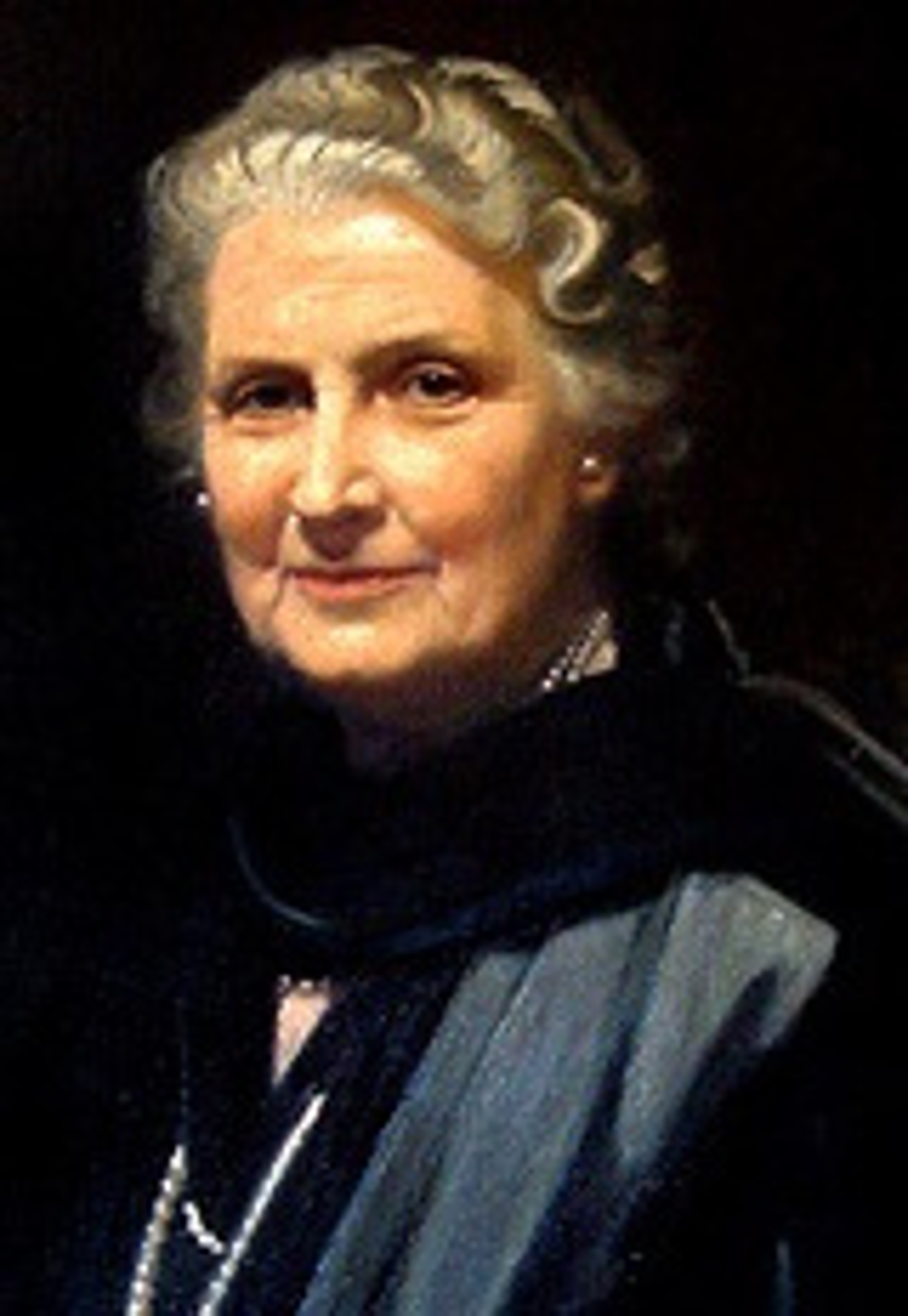
Let’s Meet Dr. Maria Montessori
A Visionary who revolutionized the field of education with her innovative approach and unwavering dedication to children’s growth and development
Born on August 31,1870, in Italy, Maria Montessori’s early passion for science and Mathematics set the stage for a remarkable life dedicated to understanding and nurturing the potential of every child.
Breaking barriers as the first woman to graduate from the University of Rome Medical School in 1896, Dr. Montessori’s pioneering spirit led her to specialize in psychiatry and pediatrics. Through her work with children in psychiatric clinics and institutions, she discovered her profound interest in child development and education.
4 years after graduating, she joined a school, where students; who were being treated as “idiots”, were trained to pass Public Examinations.
In 1907, Maria Montessori embarked on a groundbreaking journey that would reshape the landscape of education forever.
Working with underprivileged children in Rome, she established the first Casa dei Bambini which in Italian means “Children’s House.” She worked with disadvantaged children and ones that didn’t have any previous schooling and introduced her transformative teaching methods.
The Montessori Method, focusing on independence, self-directed learning, and respect for each child’s unique potential, proved to be a resounding success.
Driven by her belief in the innate curiosity and desire to learn in every child,
Dr. Montessori continued to refine her educational philosophy, emphasizing the importance of a prepared environment that empowers children to explore, discover, and learn at their own pace.
As her work gained international recognition, Maria Montessori founded the Association Montessori Internationale (AMI) in 1929, ensuring the preservation and dissemination of her educational principles worldwide. Her tireless efforts to train teachers, establish Montessori schools, and advocate for education reform left an indelible mark on generations to come.
Despite facing challenges and resistance from traditional educators, Maria Montessori remained steadfast in her commitment to nurturing self-motivated, independent learners.
Her legacy lives on through the thousands of Montessori schools worldwide that embrace her child-centered approach, hands-on learning, and focus on social and emotional development.
Dr. Maria Montessori’s enduring impact on education can be felt in the countless lives transformed by her teachings. Her philosophy continues to inspire educators, parents, and students alike, embodying the essence of a true pioneer whose vision and passion pave the way for a brighter future.
On May 6, 1952, Dr. Maria Montessori left behind a legacy that transcends time, reminding us of the boundless potential within every child and the transformative power of education. Today, her spirit lives on in the heart of every Montessori classroom, guiding us towards a world where every child is seen, heard, and empowered to fulfill their unique potential.
Philosophy of Montessori
Dr. Maria Montessori’s philosophy revolves around the belief in the innate potential of every child. She emphasized creating an environment that fosters independence, self-discovery, and a love for learning. Central to her approach is the idea of respecting each child’s individuality, cultivating a holistic development encompassing academic, social, emotional, and practical life skills.
Montessori education values hands-on learning, self-paced exploration, and the role of the teacher as a guide and facilitator. Ultimately, her philosophy aims to nurture children’s natural curiosity, creativity, and intrinsic motivation to become lifelong learners.
Prepared Environment
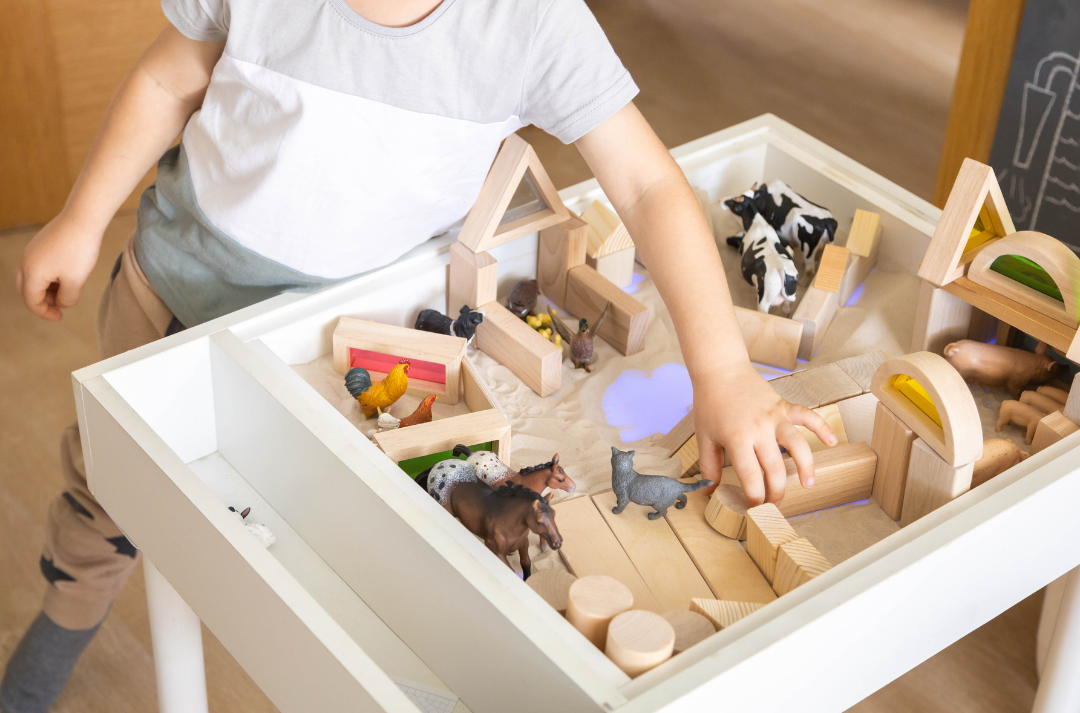
In a Montessori for children aged 3-6 years, the concept of a prepared environment is essential. It consists of carefully curated; child-centered spaces designed to meet the developmental needs of young learners. These environments are organized to be visually appealing, orderly, and accessible, with age-appropriate materials within reach. Each item has a specific purpose and function, allowing children to engage in independent exploration.
In the prepared environment, the Montessori materials are grouped by their curriculum area and displayed in progression order from easiest to hardest.
The prepared environment fosters a sense of order, independence, and concentration, empowering children to make choices and develop essential skills at their own pace. Following are the key components of a prepared Montessori environment.
- Environment should be created to make children independent.
- Classroom should be designed as per child size.
- Everything should be accessible to the kids.
- Children should be given freedom to do activities by themselves.
- Children should find their environment to be attractive, challenging and encouraging at the same time.
- The environment includes the Montessori Materials.
Montessori Materials
Dr. Maria Montessori stated, “Nothing goes into the mind that does not first go through the hands.”
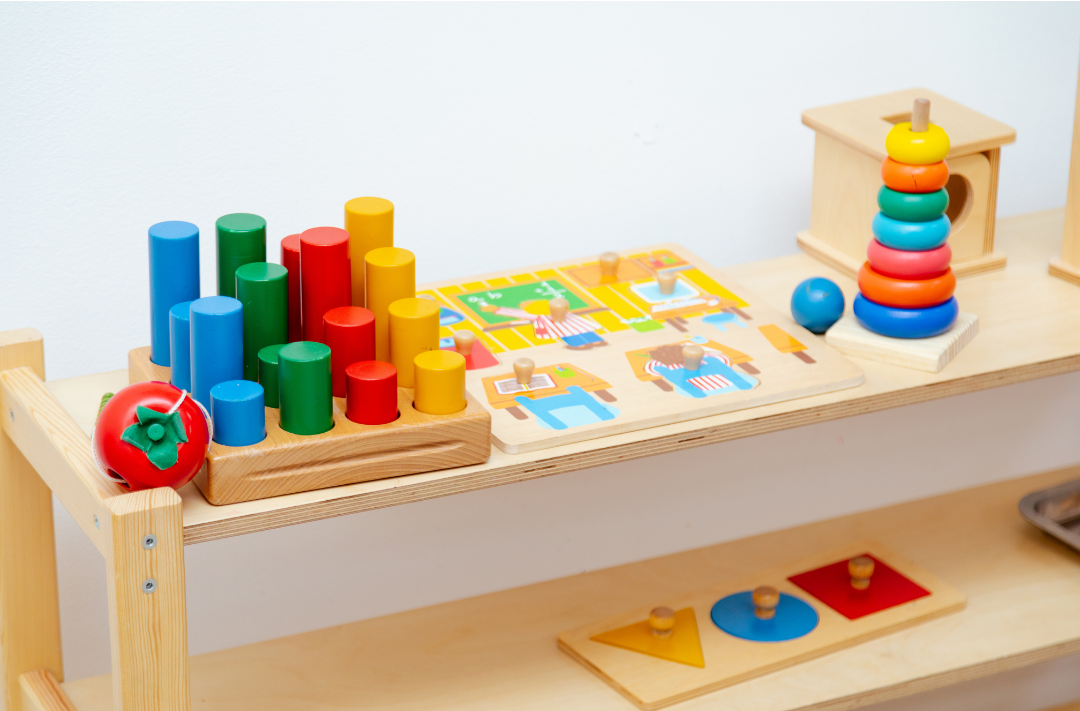
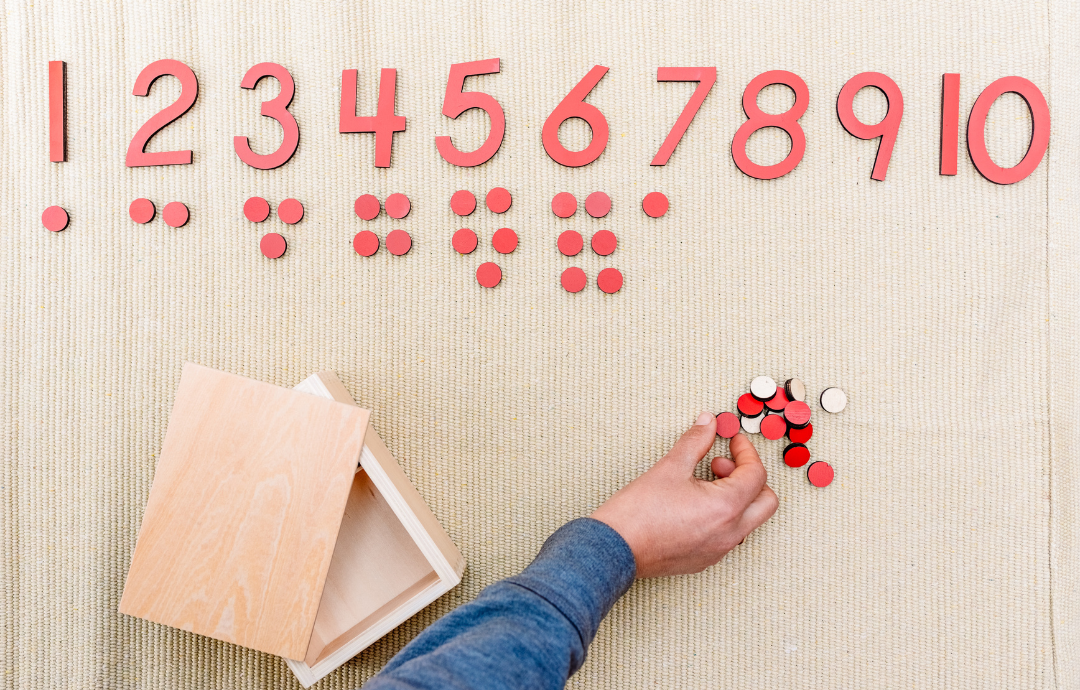
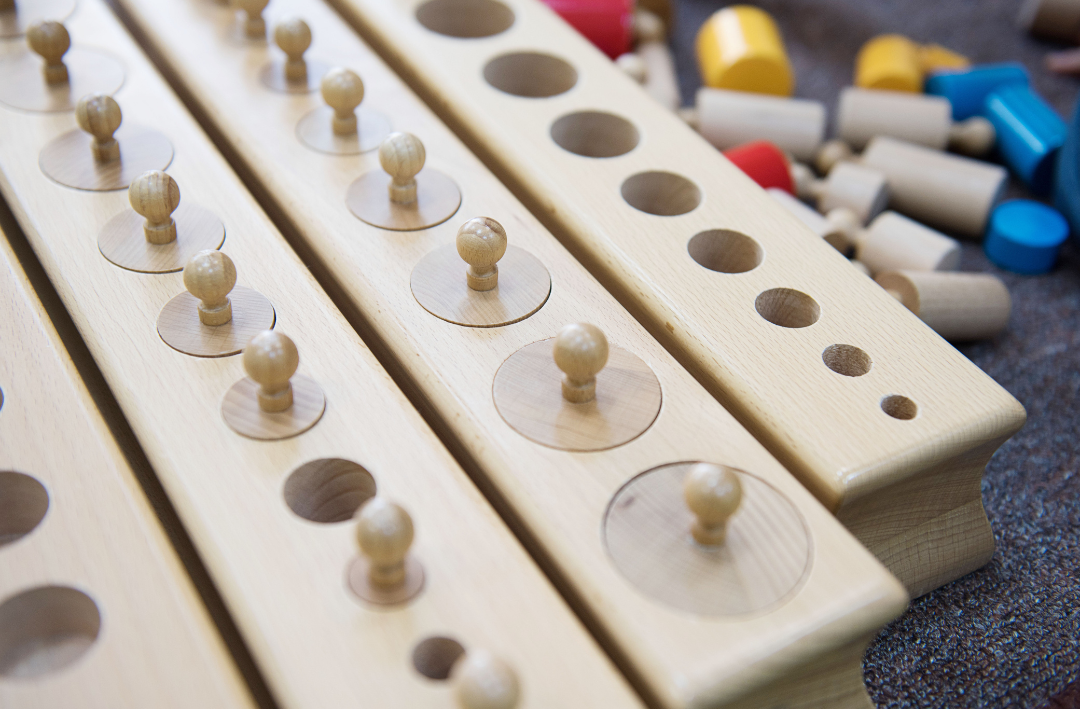
Montessori materials are a hallmark of the Montessori educational approach, designed to facilitate hands-on, experiential learning for children. These materials are meticulously crafted to be sensorial, engaging, and self-correcting, allowing children to explore concepts through independent discovery.
Each material serves a specific educational purpose, promoting the development of key skills such as fine motor control, concentration, problem-solving, and critical thinking. From the iconic pink tower to the golden bead material and the spindle boxes, Montessori materials are carefully designed to meet the developmental needs and interests of children across various age groups. Through interaction with these thoughtfully curated materials, children develop a deep understanding of abstract concepts and are empowered to learn at their own pace while fostering a love for lifelong learning.

Montessori Curriculum
The Montessori curriculum is a holistic educational approach that emphasizes child-led learning, independence, and respect for each child’s individuality. It is a learning framework that incorporates the cognitive, physical, social and emotional aspects of child development.
Rooted in the principles of self-directed exploration and hands-on experiences, the Montessori curriculum spans multiple areas, including practical life skills, sensorial exploration, language, mathematics, cultural studies, and art.
Integrated into the curriculum are specially designed Montessori materials that serve as tools for learning, promoting concrete understanding of abstract concepts. The curriculum is structured to follow the child’s natural development, allowing for individualized progress and mastery of skills at the child’s own pace. By cultivating a nurturing and stimulating environment that encourages curiosity, creativity, and a love of learning, the Montessori curriculum aims to support the holistic development of each child academically, socially, emotionally, and spiritually.
Montessori Principles
Montessori principles are grounded in the fundamental belief that every child is a unique individual with an innate drive for learning and self-discovery. Central to the Montessori philosophy are concepts such as respect for the child, absorbent Mind, Sensitive Periods, educating the whole child, freedom of movement and choice, intrinsic motivation without the notion of Rewards & punishments, independence, individualized learning following the child’s interests, self-discipline and a prepared environment that promotes exploration and hands-on learning.
The principles emphasize the importance of allowing children to learn at their own pace, cultivating a deep sense of concentration, and building a strong foundation for lifelong learning. By creating a community based on mutual respect, collaboration, and a love for learning, Montessori principles aim to nurture the whole child, fostering a lifelong passion for exploration, discovery, and self-improvement.
Montessori Educator
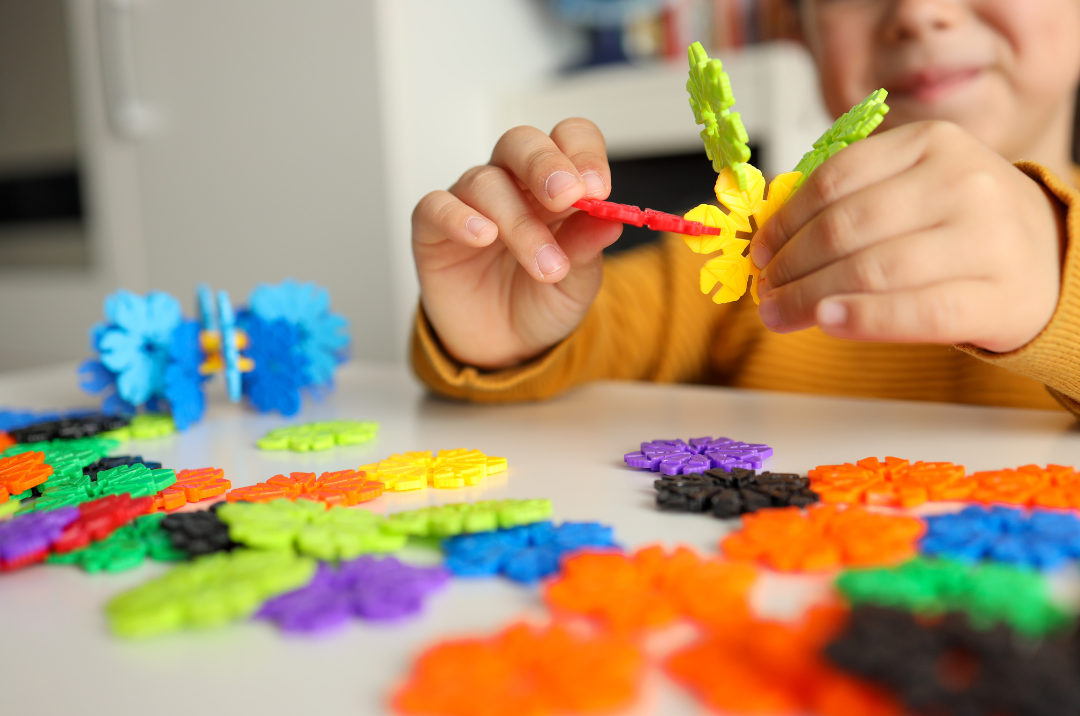
Trained in the principles and practices established by Maria Montessori, a Montessori educator is committed to creating a nurturing, child-centered environment that supports each child’s individual learning journey. With a deep respect for the unique qualities of each child, Montessori educators facilitate a curriculum that promotes independence, self-discipline, and a love for learning. They guide children in their exploration of Montessori materials, providing gentle support and encouragement as they engage in hands-on, experiential learning experiences. By serving as mentors, observers, and facilitators of the child’s development, Montessori educators play a pivotal role in cultivating a lifelong passion for learning and empowering children to reach their fullest potential.
Montessori Work Cycle
The Montessori work cycle is a fundamental aspect of the daily routine in a Montessori environment, typically lasting around three hours. During this uninterrupted block of time, children have the freedom to choose activities from various curriculum areas, engage in focused work, and develop concentration and self-discipline. The work cycle allows children to follow their interests, explore independently using Montessori materials, and progress at their own pace. Educators observe and support children as they engage in purposeful activities, fostering a sense of responsibility. The work cycle is designed to promote a deep sense of satisfaction and accomplishment as children immerse themselves in meaningful tasks, leading to mastery in a skill by repetition and practice.
Mixed Age Group
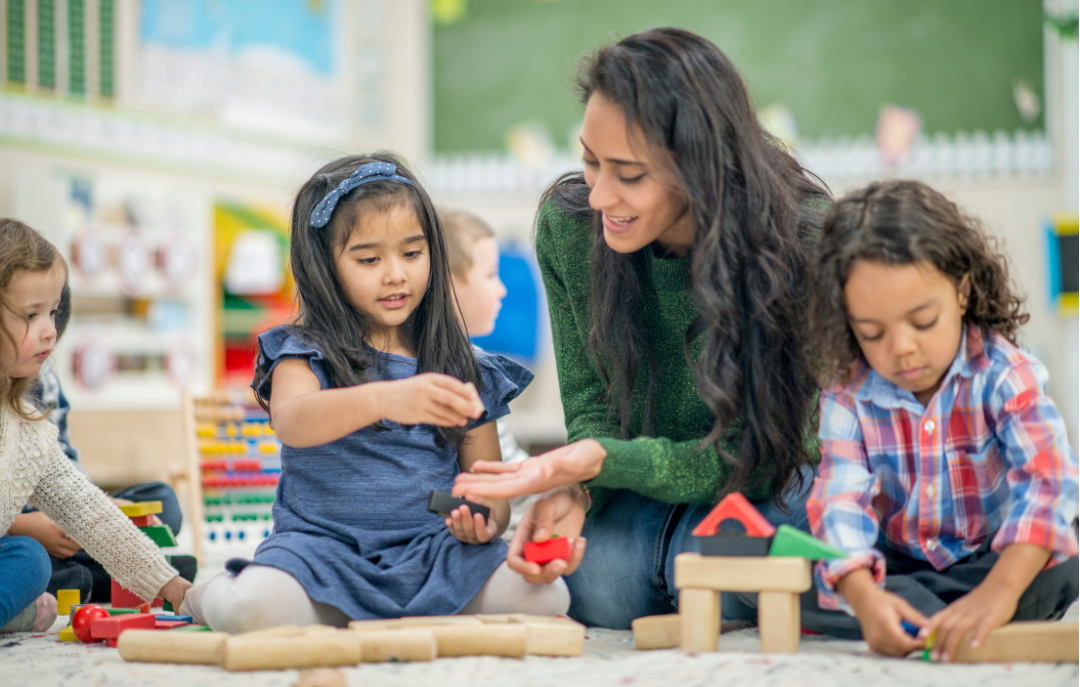
In Montessori education, the concept of mixed-age groups plays a vital role in creating a dynamic and enriching learning environment. Rather than organizing students solely by age, Montessori classrooms typically group children across multiple age ranges, such as 3-6 years or 6-9 years. This intentional blending of ages allows for natural opportunities for peer learning, mentorship, and collaborative interactions. Older children serve as role models and leaders, while younger children benefit from observing and learning from their peers.
The mixed-age dynamic fosters a sense of community, promotes empathy and social skills, and encourages children to develop at their own pace in a supportive, non-competitive atmosphere. By embracing the diversity of ages within the classroom, Montessori education nurtures a sense of belonging, cooperation, and respect for others, creating a rich and inclusive learning environment where children thrive and grow together.